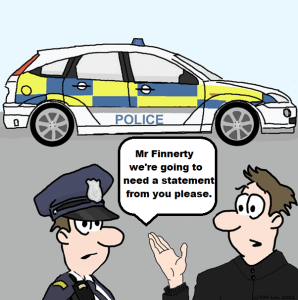
St Mungo’s Community Housing Association v Finnerty
This week we are once again looking at unfair dismissal, something we most recently looked at in the case of Rentplus v Coulson and Ward v Dimensions UK.
The question this week is:
Is omitting an assault from a report grounds for summary dismissal?
Mr Finnerty, the Claimant, was employed by St Mungo’s, the Respondent, as a Housing and Lettings Co-ordinator. The Claimant had 20 years’ clean service and worked at a site providing accommodation for homeless and vulnerable people. The Claimant worked in a building that had recently evicted a tenant for threatening behaviour relating to knife crime.
The tenant in question became hostile and threatening towards the Claimant and a postman. He was threatening to cut and stab the Claimant. The Claimant pushed the tenant out of the building and during this scuffle the tenant fell over but did not sustain serious injury. The tenant then waved two knives at the Claimant who picked up a fire extinguisher to defend himself.
The police attended the premises and the tenant was arrested. The Claimant filed a statement with the police accurately recounting the incident above. However, in his internal report to the Respondent he omitted pushing the tenant following violent threats. The tenant was convicted of assault and the Claimant developed PTSD.
The Respondent became aware of this and commenced disciplinary proceedings. The Claimant was dismissed for two counts of gross misconduct – pushing the tenant and omitting it from his report. The Respondent made a cursory attempt to contact the postman as witness but did not follow this up. The Respondent also did not have the police report available for the disciplinary hearing (but did for the appeal). The Claimant was dismissed.
The Claimant commenced an Employment Tribunal claim against the Respondent. The Employment Tribunal allowed the claim. It held that whilst the Claimant could have considered locking himself in his office he was aware of the tenant’s violent nature and the present postman when deciding to use self defence. This should have been included in the report but the nature of the ordeal meant it was reasonable for the Claimant to have been suffering from trauma and not wish to revisit the incident in his report. Therefore the decision to dismiss fell outside the range of reasonable responses.
The Respondent appealed and Employment Appeal Tribunal allowed the appeal. The EAT held the Tribunal had erred in its decision and substituted its own decision for that of a reasonable employer in the same circumstances. The omission from the report was a breach of trust and confidence. This was a fundamental breach of contract which would have made any dismissal in the range of reasonable responses.
The takeaway point
Yes, omitting such a serious incident will nearly always amount to gross misconduct. Despite the heavy mitigation evidence – clean service, long service, self defence, no police conviction for the Claimant – omitting such an incident from the employer, particularly one who works with vulnerable people, is likely to destroy trust and confidence. A case of dismissal perhaps being harsh but nevertheless fair.