My employer put me through an investigation because they thought I lied about being disabled, does that mean I can’t bring a disability discrimination claim?
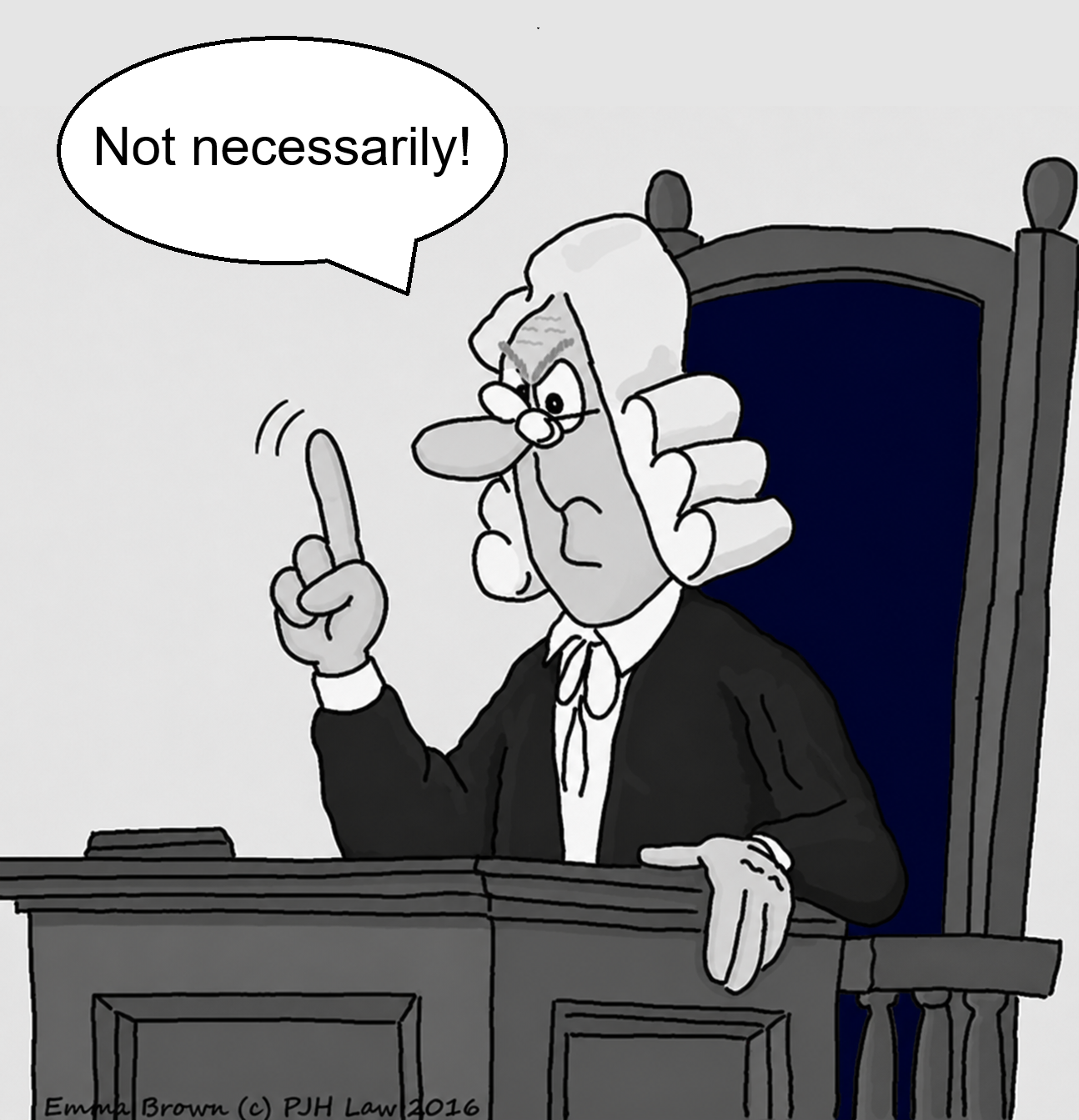
Not necessarily, said the Employment Appeal Tribunal (EAT).
This week’s case highlights an important point about discrimination arising from disability under section 15 of the Equality Act 2010. An employer’s mistaken belief about misconduct does not necessarily break the link between disability and unfavourable treatment.
In M Shah v Home Office, an employee with depression applied for an internal role under the Home Office’s Guaranteed Interview Scheme (GIS), which guarantees disabled applicants an interview if they meet the minimum criteria.
The Home Office believed that he had falsely claimed to be disabled in order to obtain the guaranteed interview and commenced disciplinary proceedings against him. The investigation was later dropped after his explanation was accepted.
The Employment Tribunal accepted that:
- The employee was disabled by reason of depression;
- He had ticked the GIS box because he was disabled; but
- The disciplinary investigation was prompted by the employer’s genuine belief that he had acted dishonestly, rather than because of his disability.
Why did the EAT intervene?
The EAT held that the Tribunal had approached causation too narrowly.
It confirmed that when considering a claim under section 15 Equality Act 2010, Tribunals must distinguish between:
- the employer’s reason for acting; and
- whether the ‘something’ that led to the treatment objectively arose in consequence of the employee’s disability.
Here, the employee had ticked the GIS box because he was disabled. That act arose directly from his disability and was an effective cause of the disciplinary investigation. The employer’s mistaken belief that he had been dishonest did not sever that causal link.
The EAT also held that the Tribunal had been wrong to conclude that applying under the Guaranteed Interview Scheme could never amount to a protected act for the purposes of victimisation. An application asserting eligibility under a disability-related positive action scheme may be ‘in connection with’ the Equality Act and therefore capable of protection. That issue was remitted for reconsideration.
The key takeaway?
An employer’s honest belief that an employee has acted dishonestly does not automatically defeat a discrimination arising from disability claim.
The EAT confirmed that:
- The causal test under section 15 is broader than simply asking why the employer acted;
- Disability need only have a significant (or more than trivial) influence on the treatment;
- An employer’s motive is not determinative of liability; and
- Tribunals must consider the objective link between the disability and the conduct that prompted the unfavourable treatment before moving on to justification.
Need help?
At PJH Law we specialise in Employment Law, feel free to call our office on 01780 757589.

![Van Vliet v Footlaffs Ltd [2026]) – HR Lessons from a £32,000 Menopause Discrimination Claim](https://pjhlaw.co.uk/wp-content/uploads/2026/09/Menopause-Discrimination.png)